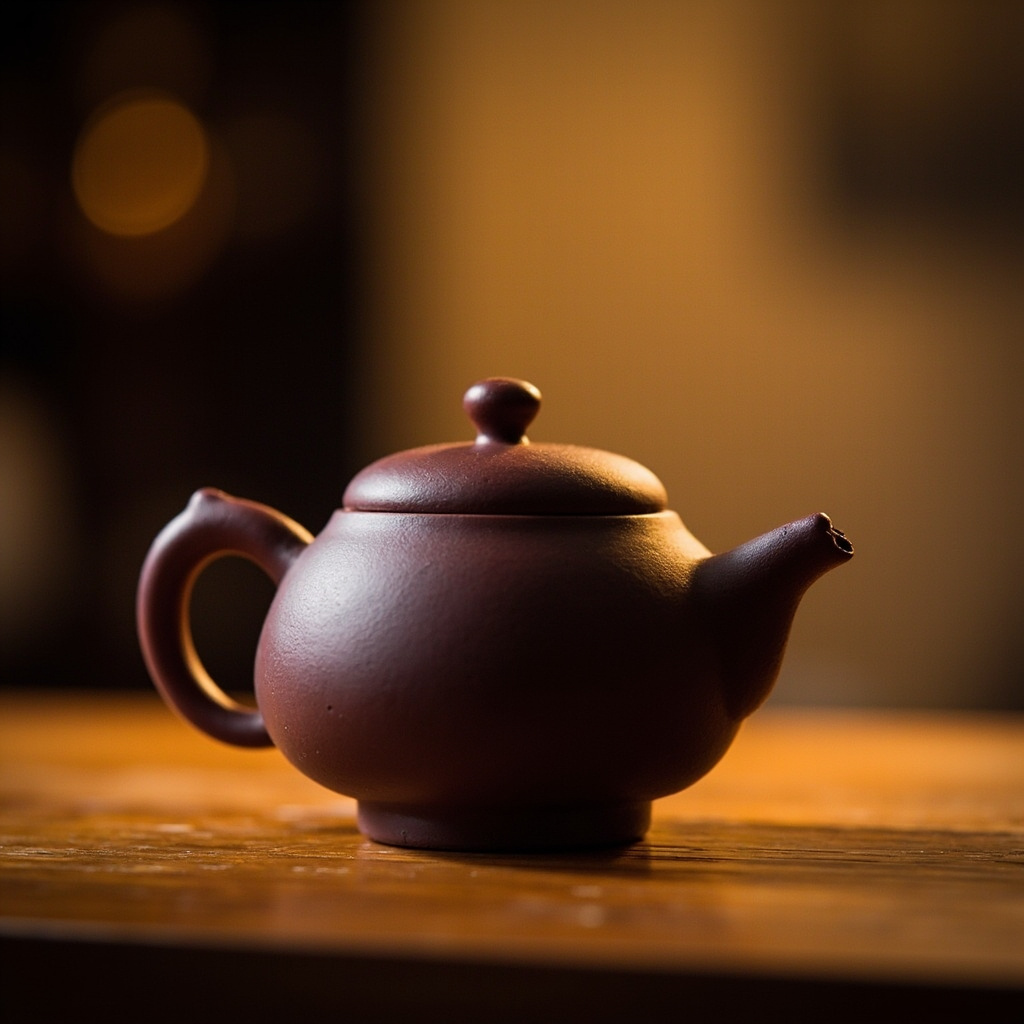
A Thousand Years of Clay and Fire
Yixing Zisha Teapots — A Universe Within One Pot
Discover the legendary unglazed stoneware teapots that have captured the hearts of tea connoisseurs for over a thousand years.
Discover the legendary unglazed stoneware teapots that have captured the hearts of tea connoisseurs for over a thousand years.
Within the heart of Jiangsu Province, where ancient kilns have burned for centuries, a extraordinary ceramic tradition emerged from the earth itself. Yixing Zisha teapots — the humble unglazed vessels that have been called "the ultimate brewing vessels" — represent the most intimate union between clay, fire, and tea.
Unlike porcelain, Zisha is an unglazed stoneware — it requires no glaze coating. Instead, it relies on the natural color and texture of the raw clay to present a beauty that is understated, warm, and subtle. The dual-pore structure of Zisha clay allows tea to "breathe" inside the pot without leaking, while a rich patina develops over years of use, transforming each pot into a living vessel with its own character.
The Yixing Zisha teapot originates from Dingshu Town, Yixing City, Jiangsu Province. Its history traces back to the Northern Song Dynasty (960-1127 CE), flourished through the Ming and Qing dynasties, and continues to this day.
Archaeological excavations at the Yangjiao Mountain kiln site in Yixing uncovered numerous Zisha fragments, confirming that by the Song Dynasty, locals were already crafting vessels from Yixing's distinctive clay. Those early pieces were simple in form, lacking the refined elegance that would later define Zisha teapots.
During the Song Dynasty, diancha (点茶, powdered tea preparation) was the dominant method. With white tea foam prized above all, black-glazed Jianzhan bowls dominated the tea scene. Zisha teapots, still a supporting actor, laid the groundwork for their future starring role.
Emperor Hongwu of Ming Dynasty issued a decree: abolish the Tang and Song tradition of pressed tea cakes (龙团凤饼) and switch to brewing loose leaf tea.
Thus, Zisha teapots emerged as the leading vessel. Gongchun (供春), revered as the "Father of Zisha Teapots," was a servant at the Jinsha Temple in Yixing during the Ming Dynasty. In his spare time, he crafted a teapot by hand, modeling it after the shape of a ginkgo tree's gall. After Gongchun, Shi Daban (时大彬) elevated Zisha craftsmanship to new heights, pioneering the "body-beating" forming method.
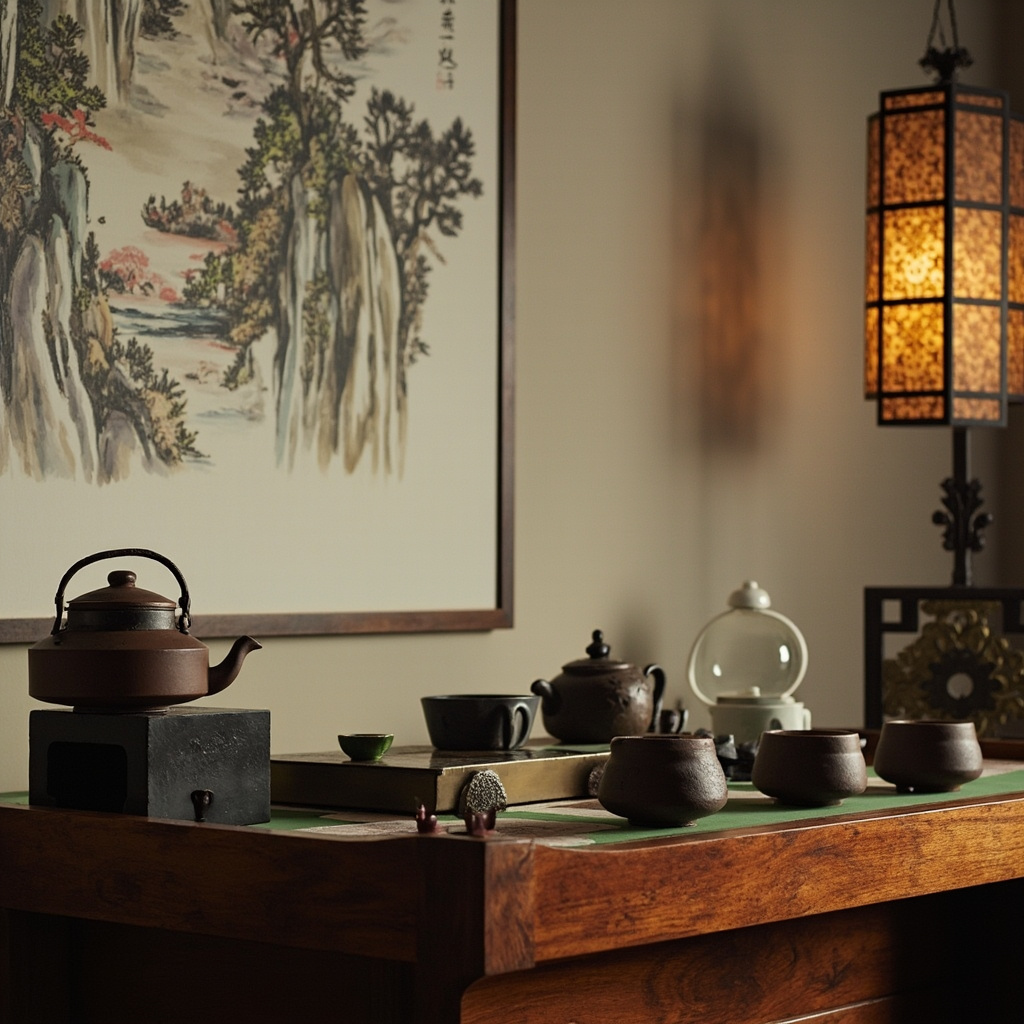
The Qing Dynasty ushered in a golden age for Zisha. Literati and scholars participated in designing and inscribing teapots, integrating poetry, calligraphy, painting, and seal carving into the vessels. Chen Mingyuan (陈鸣远) exemplified this era, establishing the tradition of "Literati Teapots" (文人壶).
Later, the "Mansheng Eighteen Forms" (曼生十八式) became legendary. Chen Mansheng, a Qing Dynasty calligrapher, collaborated with craftsmen to design eighteen pot forms, each carrying profound cultural meaning:
| Form | Symbolism |
|---|---|
| Stone Shuttle (石瓢) | Integrity and uprightness |
| Overhead Handle (提梁) | Lofty character |
| Well Rim (井栏) | Remembering the source |
| Qin Weight (秦权) | Balanced judgment |
After the founding of the People's Republic, Gu Jingzhou (顾景舟) rose to prominence, acclaimed as the "Grandmaster of Zisha." He comprehensively restored traditional techniques, established technical standards, and trained generations of successors. In 2014, Yixing Zisha pottery was inscribed on the National Intangible Cultural Heritage List.
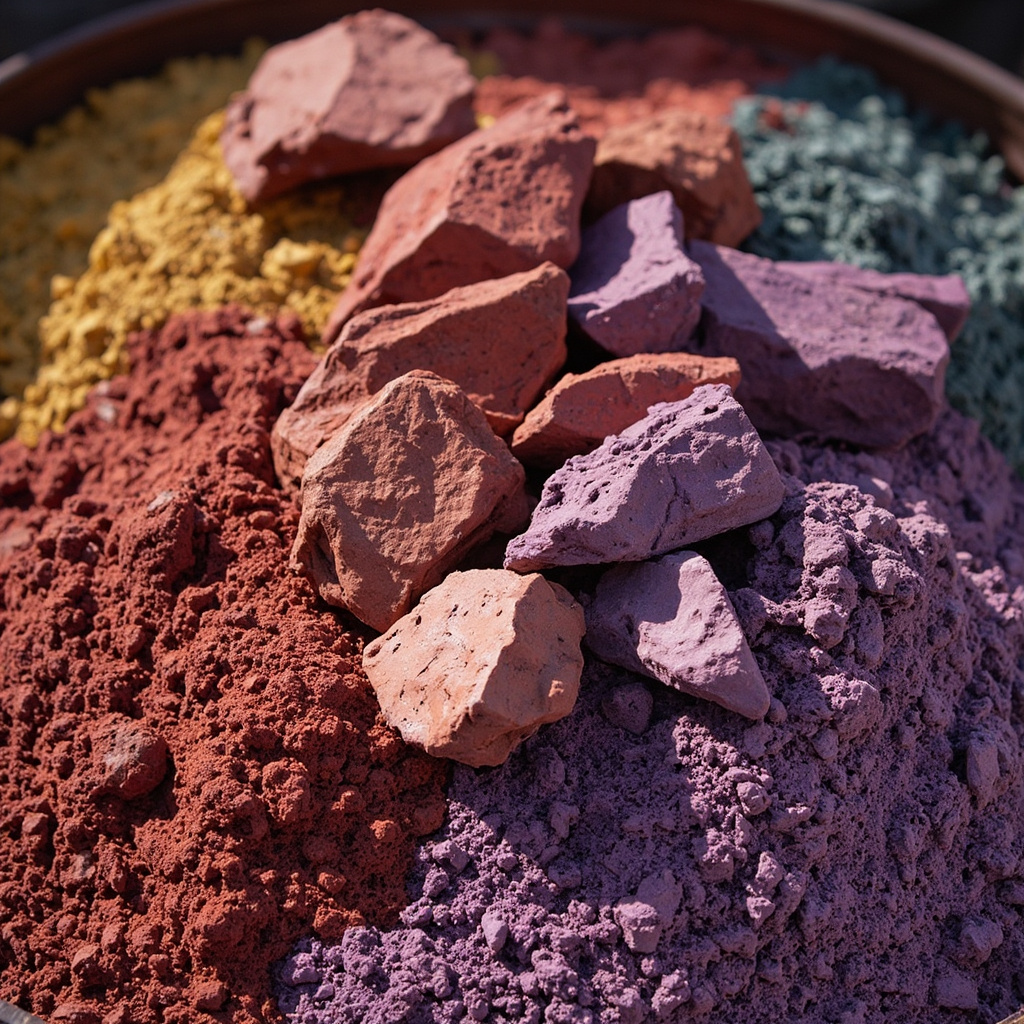
Yixing Zisha clay is a mineral unique to Dingshu Town, extracted from Huanglong Mountain and surrounding areas. Composed primarily of kaolinite, mica, and quartz, this clay underwent geological processes spanning hundreds of millions of years.
Purple-brown raw, liver-red when fired. Dignified with excellent breathability. Best for: Pu-erh, black tea, oolong.
Yellow-red raw, bright vermillion when fired. Delicate with superior heat retention. Best for: Iron Goddess, dancong.
Blue-gray raw, cream-yellow when fired. Elegant with neutral character. Best for: Green tea, white tea, raw pu-erh.
Pale yellow-green, rare. Often used for decorative overlays rather than full vessels.
| Clay | Raw Color | Fired Color | Best For |
|---|---|---|---|
| Purple (紫泥) | Purple-brown | Liver-red | Pu-erh, black tea, oolong |
| Vermillion (朱泥) | Yellow-red | Bright vermillion | Iron Goddess, dancong |
| Duan (段泥) | Blue-gray | Cream-yellow | Green tea, white tea |
Raw Zisha ore cannot be used directly. It requires processing:
Traditional handmade teapots often use clay aged over one year. This is one reason handmade pots are precious.
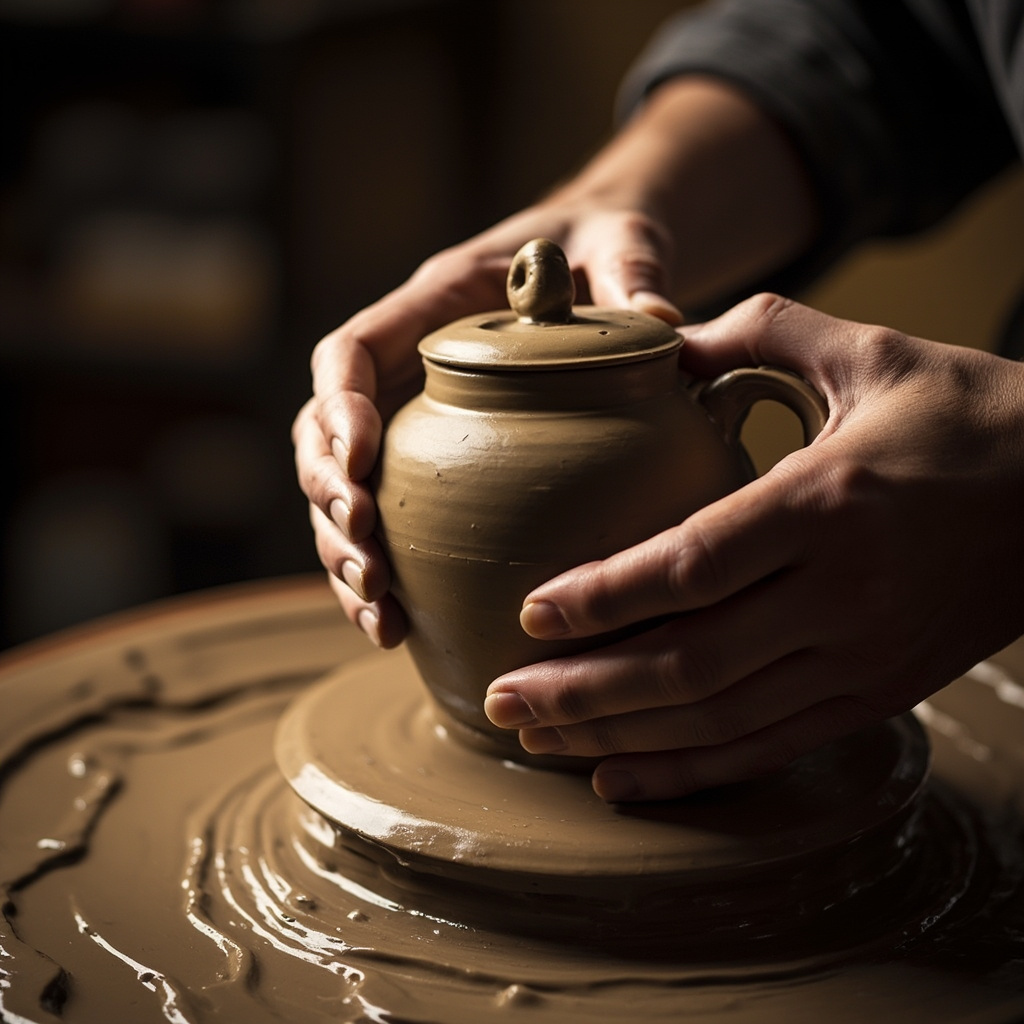
Clay slabs shaped by hand using paddles. Entirely shaped by hand. Long production cycle (days to weeks). Each pot is a unique artwork. Higher price, greater collectible value.
Plaster molds assist in forming. Body is paddled into shape, then gently pressed against mold for refinement. Higher efficiency, consistent quality. Better value for daily use.
Experienced collectors can distinguish fully handmade from semi-handmade pots at a glance: handmade pots have paddle marks and seam lines visible on the interior walls — signatures of the maker's hands.
A single Zisha teapot passes through dozens of steps:
Wood-firing uses pine wood as fuel, with flames dancing across the pots. Wood ash settles on surfaces, creating natural ash glaze and unique "fire colors" — varying shades of orange, amber, and grey. Each wood-fired pot is a one-of-a-kind masterpiece.
However, wood-firing demands precise temperature control. Success rates often fall below 50%. Modern gas and electric kilns offer controlled, stable firing with higher success rates.
Zisha carving techniques include:
| Category | Characteristics | Representative Forms |
|---|---|---|
| Plain Forms (光素器) | Geometric, unadorned, beauty through line | Stone Shuttle, Classic, Xishi |
| Sculpted Forms (花塑器) | Naturalistic, sculptural decoration | Pine Section, Plum Stake |
| Ribbed Forms (筋纹器) | Regular horizontal ridges | Chrysanthemum, Melon Ridge |
The triangular body features clean, strong lines that are both sturdy and graceful. The "stone" symbolizes the integrity of a noble person.
The round, full body, short spout like a cherry, and slender handle reminiscent of a beauty's arm. Xishi pots excel with oolong teas.
Modeled after ancient war drums, the slightly bulging belly conveys a sense of grounded power. Elegant gravitas beloved by seasoned tea enthusiasts.
Modeled after the tree gall, the body covered in textured bark, rugged and ancient — the archetypal Zisha form.
A Zisha teapot is never isolated. It exists on a tea table, engaging in subtle conversation with its surroundings. A skilled potter considers how a teapot harmonizes with the light and setting of a tea room.
Connoisseurs select pots by season: fresh greens for spring, elegant tones for summer, rich warmth for autumn, deep warmth for winter. A pot has feelings too.
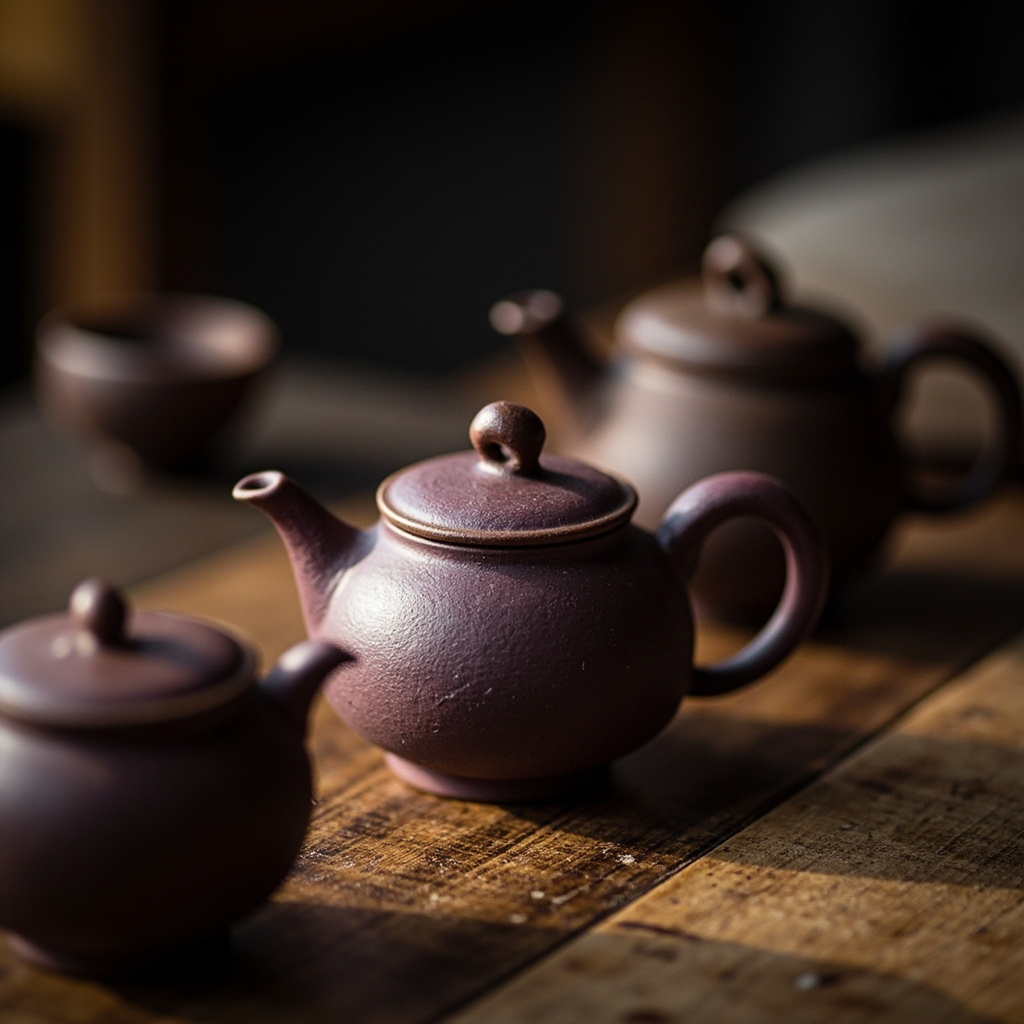
Quality Zisha clay characteristics:
Ordinary clay with added metal oxide colorants may be cheap but lack Zisha properties. Long-term use may harm health. Purchase from reputable sources.
Spout, handle, and body form a straight line
Lid and mouth fit seamlessly; tilting doesn't cause spills
Spout pours smoothly, cuts off cleanly
Flat and stable when placed
Legitimate artists stamp their work on the base or inside the lid:
| Type | Price Range | For |
|---|---|---|
| Machine/slip-cast | Under ¥100 | Beginner trial |
| Semi-handmade | ¥200-2000 | Daily use |
| Full handmade (entry) | ¥2000-10000 | Intermediate collectors |
| Master works | ¥10000+ | Collection/investment |
New pots need "opening (开壶)" to remove kiln residue:
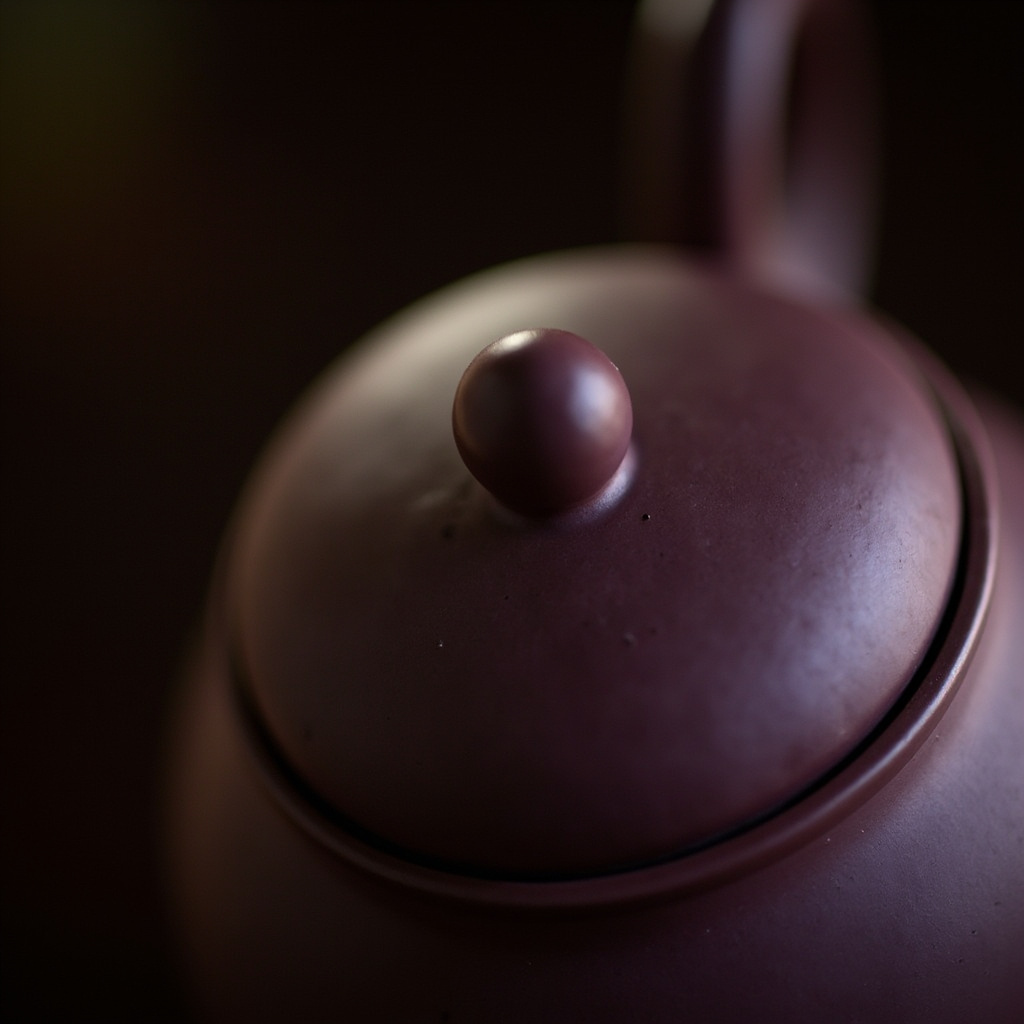
Patina (包浆) is the oxidation layer and tea oil渗透 formed through years of use. A well-nurtured pot develops a surface warm as jade, with a subtle, inner glow — a living vessel.
After each brewing session, rinse the pot with hot water. Gently wipe the body with a soft cloth. Invert on a drying rack to air dry naturally. Brew tea regularly; don't let it sit unused for long.
Never use detergent — destroys patina. No rough scrubbing — causes scratches. Never leave tea in the pot overnight — creates stains. Don't rush by pouring tea directly over the exterior.
| Era | Master | Contribution |
|---|---|---|
| Ming | Gongchun | Created the first Zisha pot |
| Ming | Shi Daban | Established fundamental forming methods |
| Qing | Chen Mingyuan | Initiated the Literati Pot tradition |
| Qing | Chen Mansheng | Designed the Eighteen Forms |
| Modern | Gu Jingzhou | Standardized modern Zisha techniques |
| Modern | Jiang Rong | Grandmaster of sculpted forms |
Every Zisha pot embodies decades of unwavering dedication. Zisha artists typically begin their training in their teens, working at the clay bench for十几个 hours daily. A single handmade pot requires dozens of steps over days or weeks.
Tea circles have a saying: "Water is tea's mother; the pot is tea's father."
The bond between Zisha and tea is inseparable:
Seasoned tea lovers advocate "one pot, one tea" — each pot used for only one type of tea. Because Zisha absorbs aroma, switching teas contaminates the pot's character. Choosing a pot means choosing a tea — and a way of life.
| Recommended Pot | Recommended Tea |
|---|---|
| Purple clay | Pu-erh, black tea, roasted oolong |
| Vermillion clay | Iron Goddess, dancong |
| Duan clay | Green tea, white tea, raw pu-erh |
Master works appreciate more
Authentic ore retains value better
Handmade pieces are superior
Single pieces and limited editions are more valuable
The Zisha collection market has grown steadily. Works by recognized masters command premium prices, often reaching hundreds of thousands or millions. Ordinary collectors can start with mid-career talented artists — better value, strong appreciation potential.
Zisha teapots are poetry written in clay and fire, a dialogue between craftsman and scholar, a crystallization of a thousand years of tea culture.
From Song Dynasty earth to Ming Dynasty hands, from Gongchun's tree-gall pot to the countless fine pots in today's Yixing — Zisha has traversed centuries while retaining its simplicity and warmth.
May every tea lover find their perfect pot.
From entry-level handmade pots to museum-worthy master pieces, discover the perfect Zisha teapot to start or expand your collection.
Explore Our Zisha Collection →Discover the legendary black-glazed tea bowls that once graced imperial courts.
Explore the meditative traditions of Gongfu tea preparation.