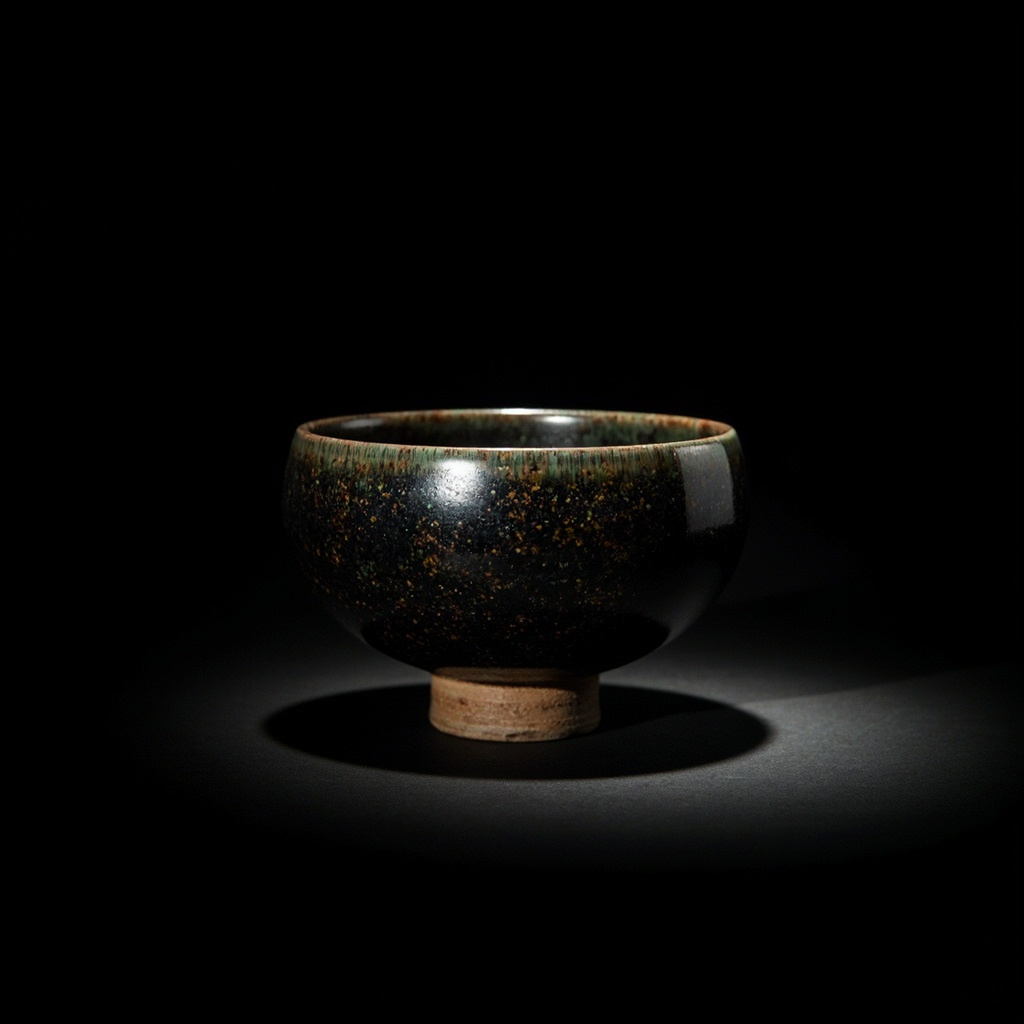
A Thousand Years of Kiln Fire
Jianzhan — The Peak of Song Dynasty Ceramics
Discover the legendary black-glazed tea bowls that once graced the imperial courts of China and transformed Japanese tea culture.
Discover the legendary black-glazed tea bowls that once graced the imperial courts of China and transformed Japanese tea culture.
In the mists of Fujian Province, where ancient kilns once burned bright against the hillsides, a extraordinary ceramic tradition emerged that would captivate emperors, Zen monks, and connoisseurs for a thousand years. Jianzhan — the humble tea bowl that became the most celebrated ceramic of the Song Dynasty — represents the alchemy of earth, fire, and artistic vision at its most sublime.
These black-glazed vessels, born from iron-rich clay and transformed by the mysterious alchemy of the kiln, are not merely cups — they are portals to another era, when tea was not merely drunk but contested, celebrated, and elevated to an art form.
Jianzhan (建盏, literally "Fujian bowl") refers specifically to the black-glazed tea bowls produced at the Jian kiln (建窑) in Jianyang, Fujian Province, China. The history of Jianzhan dates back to the late Tang Dynasty (618-907 CE), reaching its peak during the Song Dynasty (960-1279 CE) and flourishing into the Yuan Dynasty.
The Jian kiln, located in present-day Jianyang District, Nanping City, Fujian, is one of the most celebrated kilns of the Song Dynasty and one of China's eight famous kiln systems.
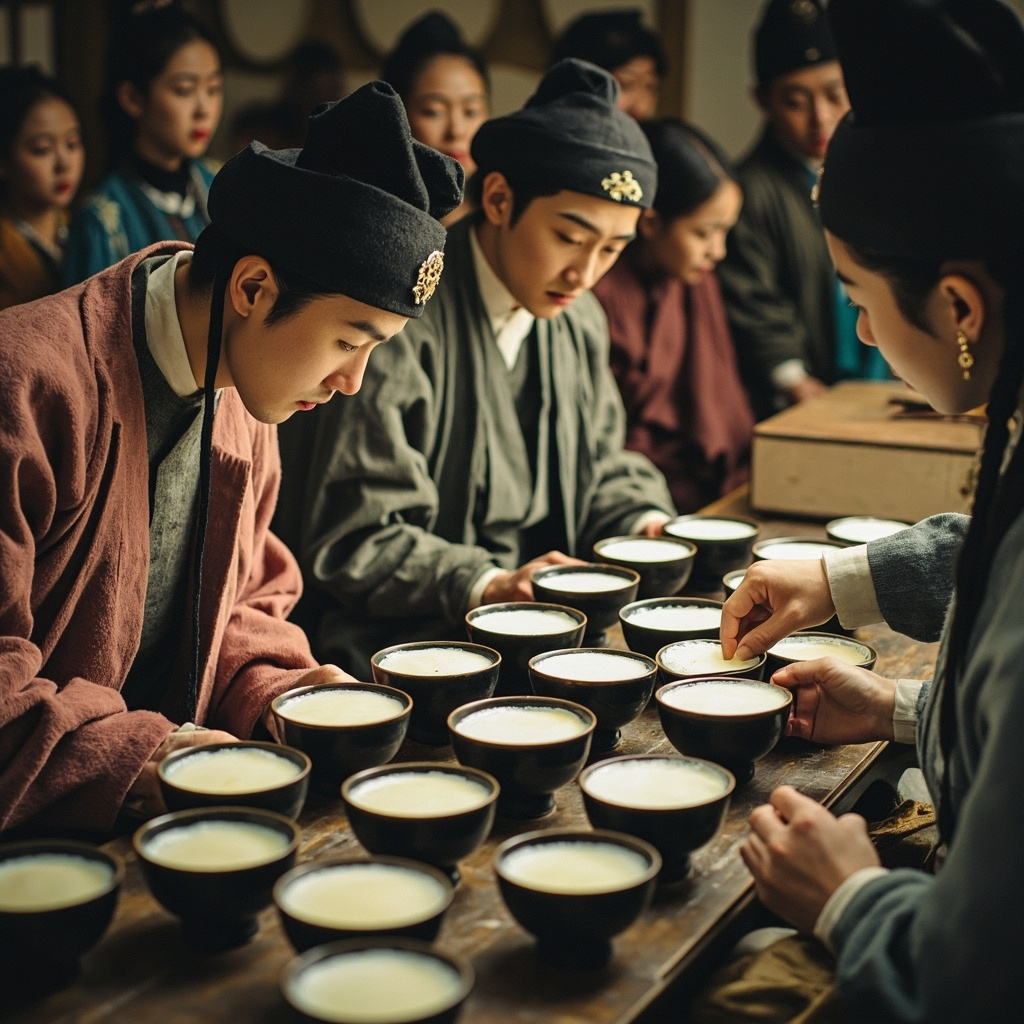
The extraordinary popularity of Jianzhan cannot be separated from the doucha (斗茶, tea competing) culture that swept through Song Dynasty society. Song Dynasty China experienced a golden age of tea culture. Literati, officials, and even the emperor himself participated in doucha — a sophisticated art of preparing and judging tea.
The judging criteria focused on two elements:
Black-glazed Jianzhan bowls provided the perfect canvas to display white tea foam, making them the preferred vessels for doucha competitions.
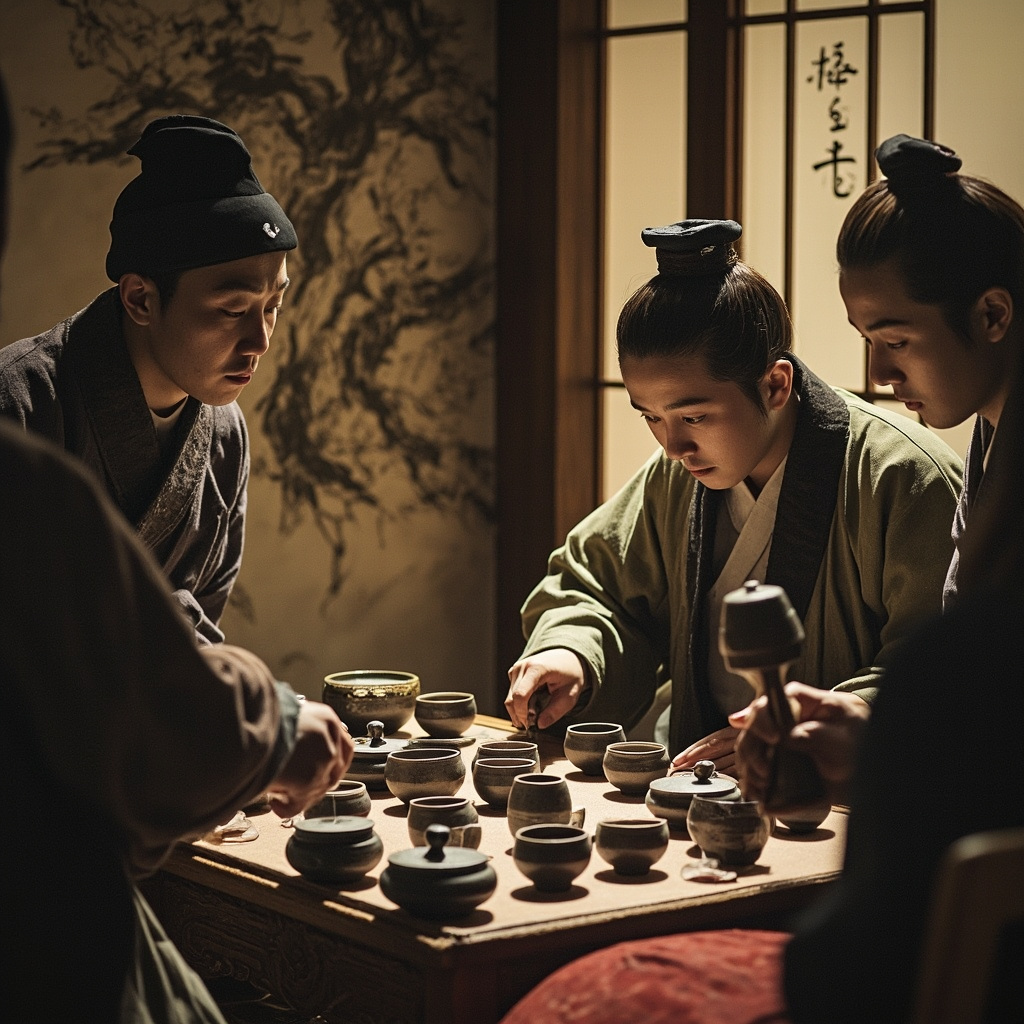
During the Song Dynasty, Jianzhan were designated as imperial tribute items — reserved for the exclusive use of the emperor and court. Archaeological excavations have uncovered numerous Jianzhan fragments bearing the inscriptions "Gong Yu" (供御, for imperial use) and "Jin Zhan" (进盏, tribute bowl), confirming their prestigious status.
Jianzhan traveled far beyond China's borders via the Maritime Silk Road, reaching Japan, Korea, and Southeast Asia. In Japan, these black-glazed bowls became known as "Tenmoku" (天目) — named after the Tianmu Mountain where a Chinese monk first presented such bowls to Japanese monks.
Japanese tea ceremony masters, most notably Murata Jukō (村田珠光, 1423-1502), incorporated Tenmoku into Japanese tea culture, elevating these bowls to sacred objects.
The secret behind Jianzhan's unique appearance lies in its iron-rich clay body — a defining characteristic that sets it apart from all other Chinese ceramics. The local clay near Jianyang contains exceptionally high iron content (7-10%), extremely rare among global ceramic materials.
| Characteristic | Description |
|---|---|
| Color | Dark brown to charcoal gray |
| Sound | Produces a dull, metallic ring when tapped |
| Magnetic | Weakly attracted to magnets |
| Heat Retention | Excellent — cups stay warm but don't burn hands |
The most astonishing feature of Jianzhan is the kiln transformation (窑变) that creates its mesmerizing glaze patterns. At temperatures exceeding 2,370°F (1,300°C), complex chemical reactions occur within the iron-rich glaze. Different crystal forms emerge, creating patterns of extraordinary variety and beauty.
Dragon Kiln (龙窑) firing is essential to this process. These kilns are built into hillsides, their elongated structure resembling a dragon. Fire enters from the lower end, rising through the chamber. Temperature distribution varies throughout — and it is this "imperfection" that gives each Jianzhan its unique character.
Multi-colored iridescence like a galaxy. The pinnacle of Jianzhan artistry.
Round droplets like oil on water. Dense silvery-gold spots that shimmer.
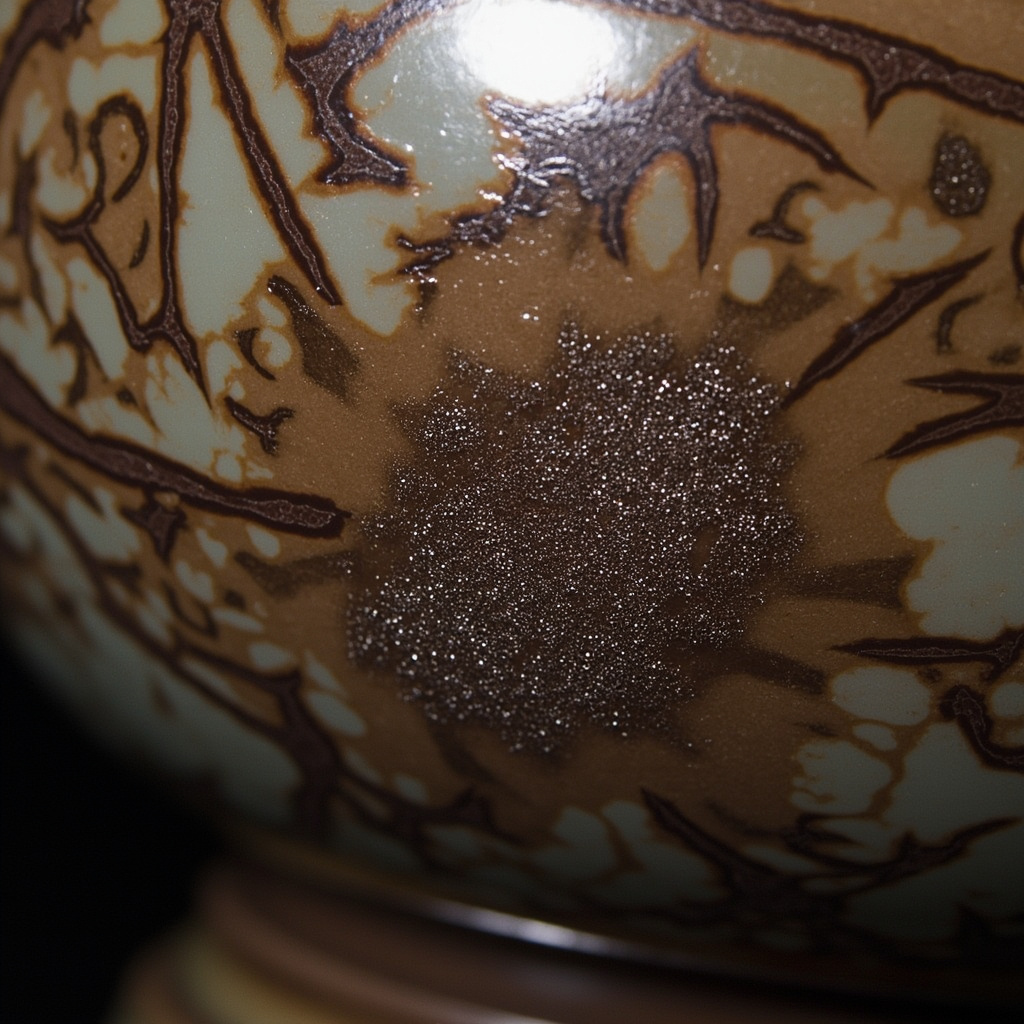
Spots resembling partridge feathers. Rare and distinctive pattern.
Flowing streaks like rabbit fur. The most classic Jianzhan pattern.
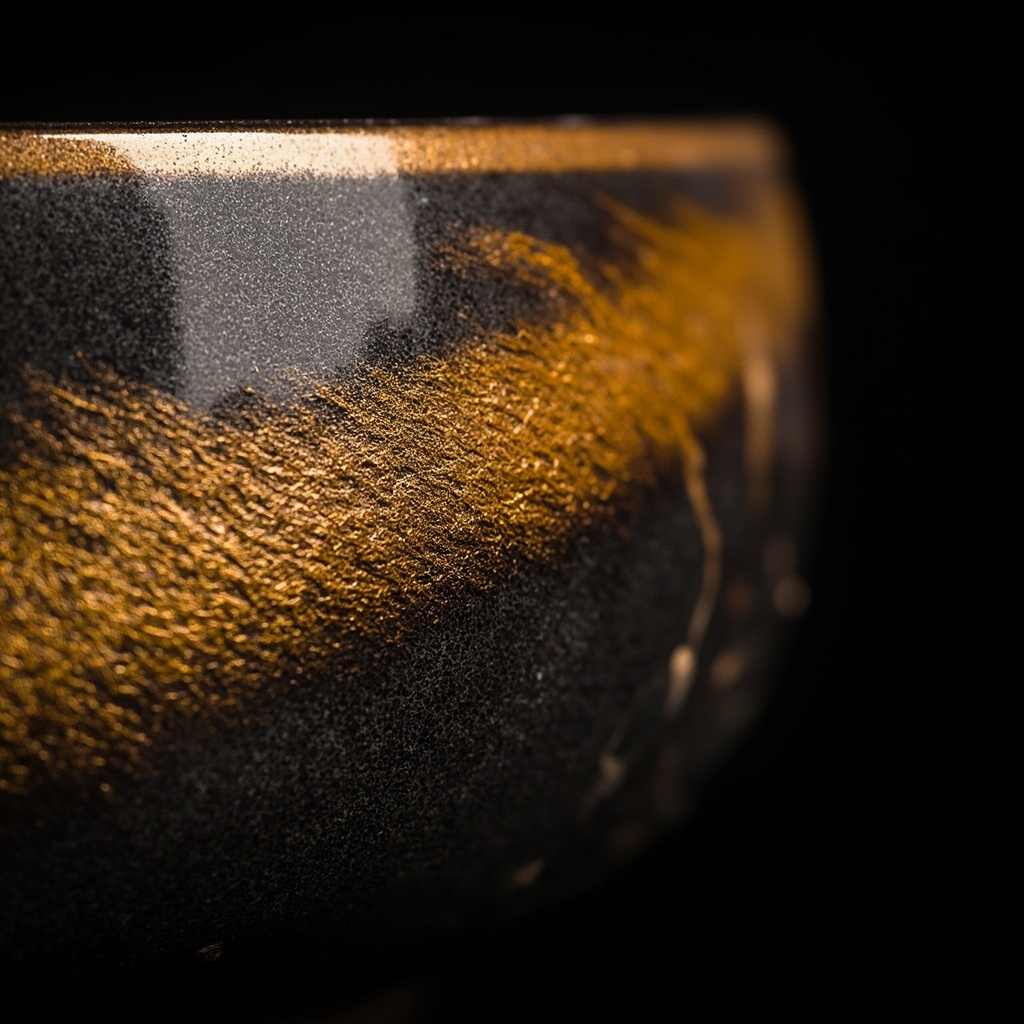
Tuhao is the most classic and representative Jianzhan glaze pattern. During high-temperature firing, hematite crystals flow with the glaze liquid, creating elongated streaks. Colors range from golden (jin tuhao) to silvery (yin tuhao).
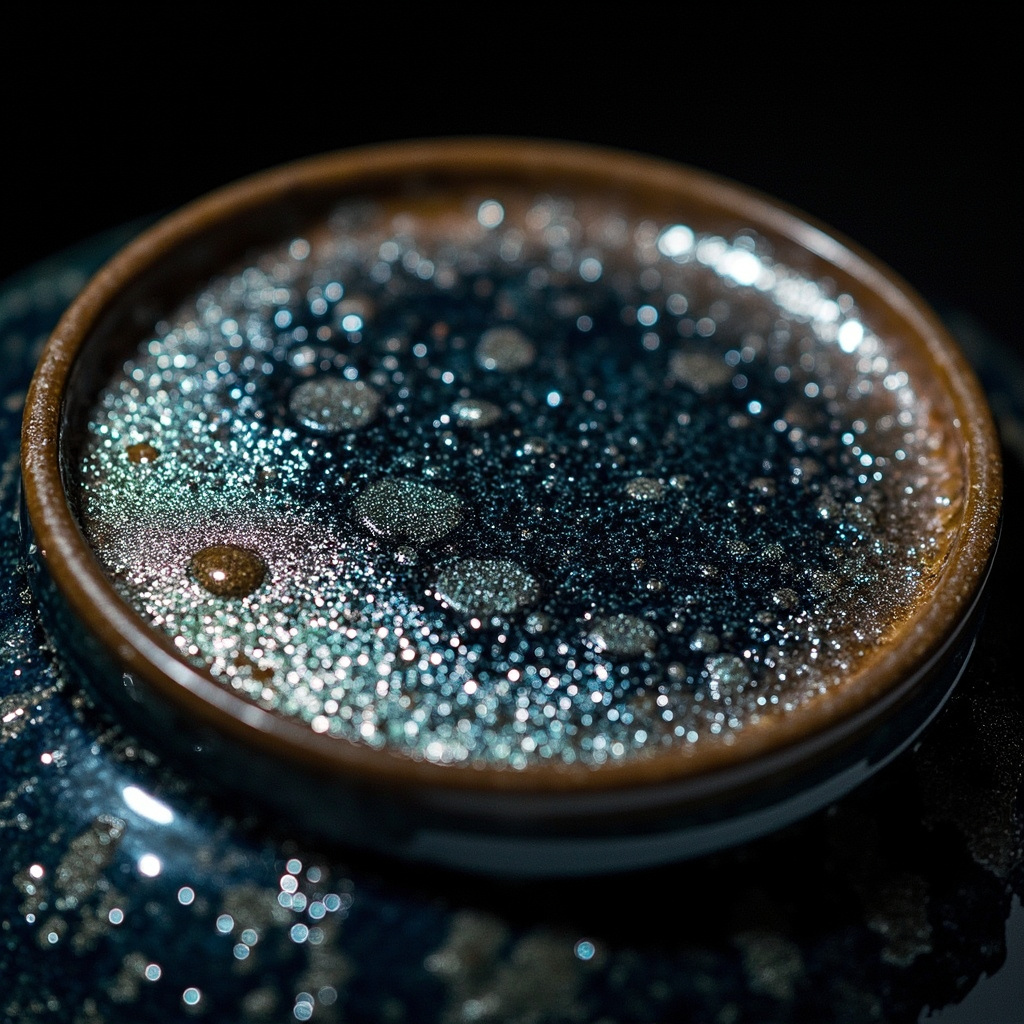
Youdi glaze displays dense silvery-gold or golden round spots that shimmer under light, resembling oil droplets floating on water. Creating youdi requires precise control of kiln temperature and cooling rates — any deviation prevents the pattern from forming.
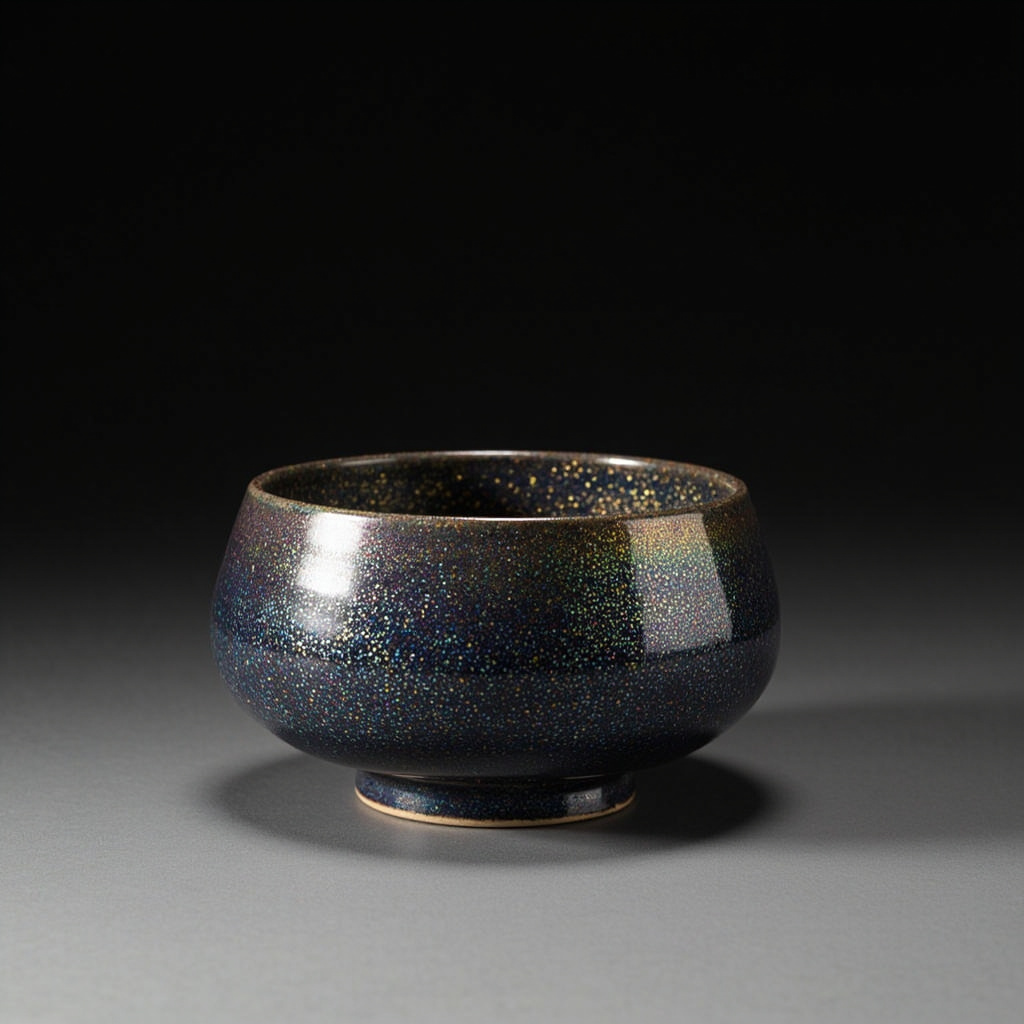
Yōhen represents the highest achievement of Jianzhan glazing — and the rarest. The glaze presents blue-purple and green-brown iridescent colors. As the viewer rotates the bowl, colors shift and flow like a dreamlike galaxy. Only a dozen or so surviving Song Dynasty Yōhen bowls exist worldwide. Most are treasured in Japanese and Chinese museums.
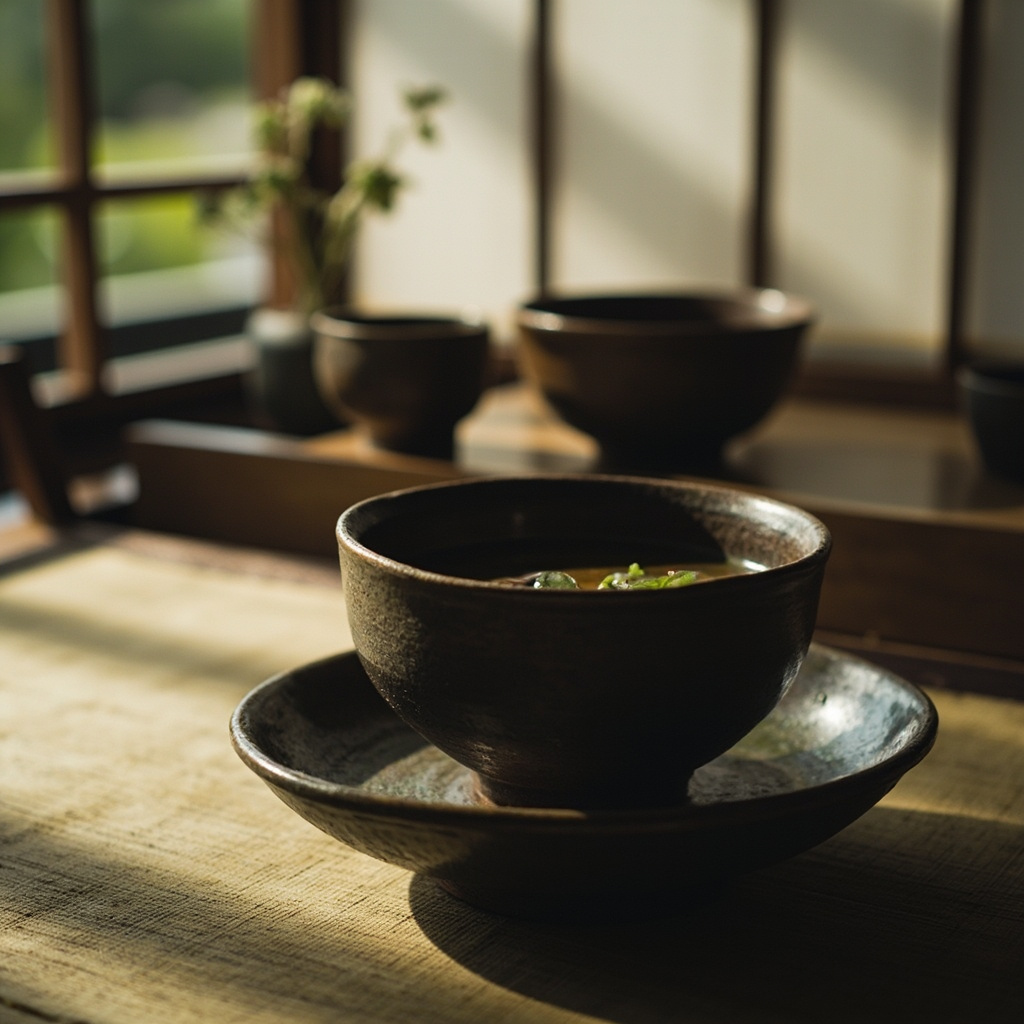
Song Dynasty tea preparation differed dramatically from today's methods. The era favored diancha (点茶, point tea): tea leaves were ground into fine powder, placed in the bowl, mixed with boiling water using a bamboo whisk (cha xian), and beaten into thick, lasting foam.
Jianzhan bowls were perfectly designed for this method:
Whisk vigorously to achieve uniform, fine foam
Observe how long the foam "bites" the cup walls
Darker cup walls better contrast white tea foam
Black-glazed Jianzhan completely dominated this visual aesthetic competition.
Jianzhan transcended its function as a tea vessel to become a cultural symbol. Song Dynasty literati pursued aesthetics of "purity, tranquility, elegance, and harmony" — and Jianzhan, with its rustic beauty, became a treasured object on scholar's desks.
When Zen Buddhism spread to Japan, Jianzhan found new life. Japanese tea ceremony masters gave these bowls the profound aesthetic concept of wabi-sabi (侘寂) — the beauty of imperfection, incompleteness, and transience.
| Quality | Signs |
|---|---|
| Superior | Pure color, clear natural patterns, rich layers |
| Medium | Patterns present but lacking vitality |
| Inferior | Dull color, fuzzy patterns, obvious artificial markings |
Modern counterfeits often use chemical glazes that appear too uniform and rigid, lacking the natural variation of authentic kiln transformation. Purchase from reputable sources with quality testing reports.
Authentic Jianzhan must have iron-rich clay:
Traditional Jianzhan are hand-thrown:
Machine-made or slip-cast reproductions appear too perfectly uniform, lacking the character of handmade work.
Deep, resonant "dong-dong" sound when tapped
Sharp, thin "ding-ding" sound
| Source | Characteristics |
|---|---|
| Jianyang origin | Quality assured, traceable, moderate pricing |
| Master craftsman pieces | High collection value, premium pricing |
| Reputable e-commerce | Wide selection; verify authenticity carefully |
| Antique markets | Complex market; recommend experienced buyers |
The Jian kiln archaeological site is located in Shuiji Town, Jianyang District, Nanping City, Fujian Province. It is a National Key Cultural Relic Protection Unit. Excavations have uncovered over a dozen dragon kilns, with the longest stretching over 100 meters — testament to the massive scale of Jian kiln production.
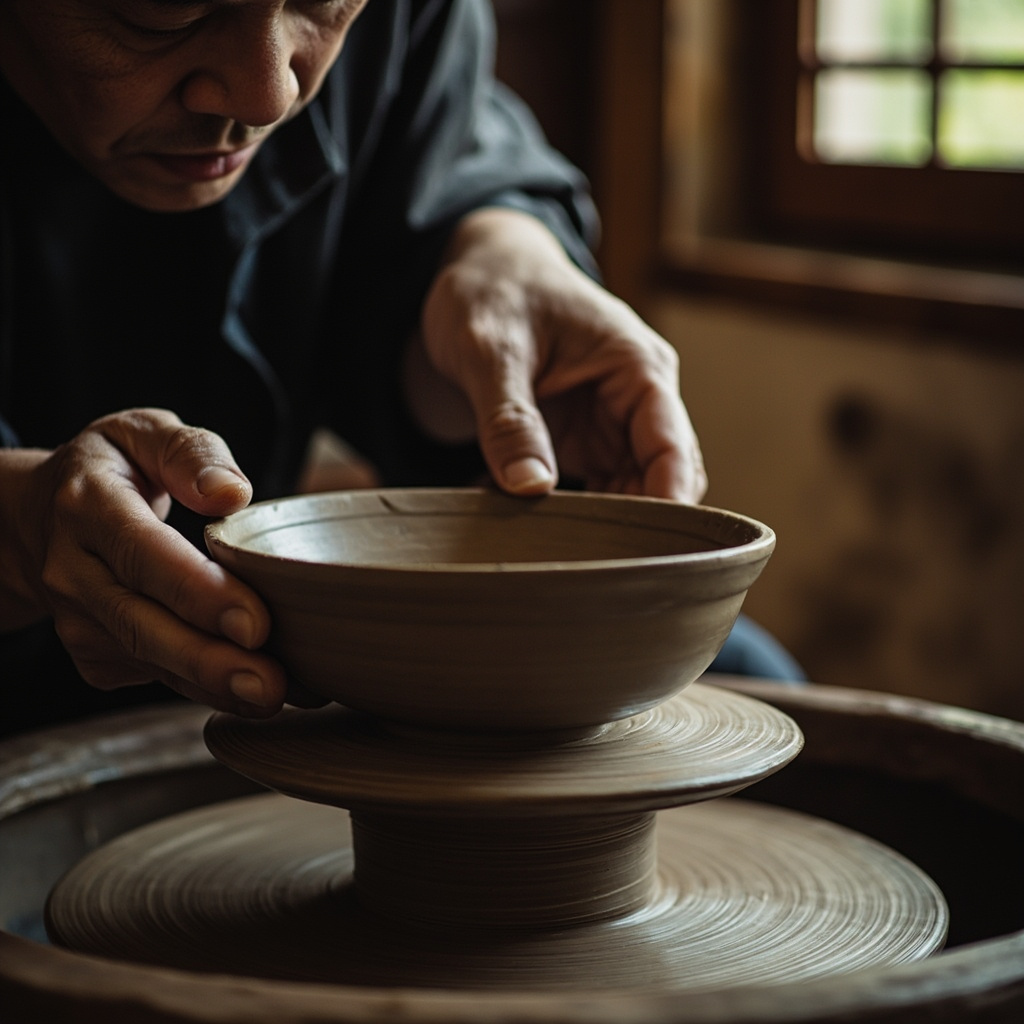
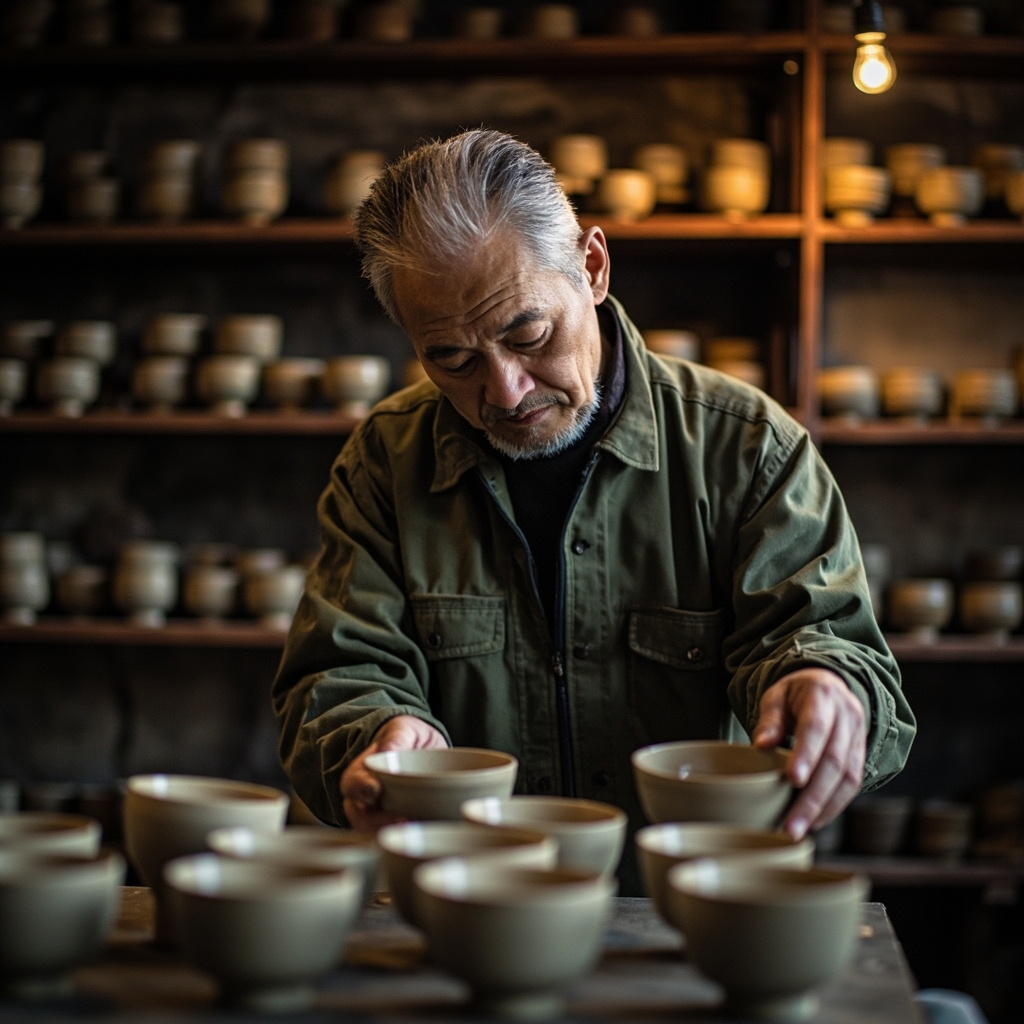
Central Academy of Arts and Design collaborates with Jianyang porcelain factory on systematic research
First successful reproductions of Song Dynasty tuhao bowls
Famous patterns like youdi and yōhen successfully reproduced
Jianzhan industry flourishes with complete industrial chain
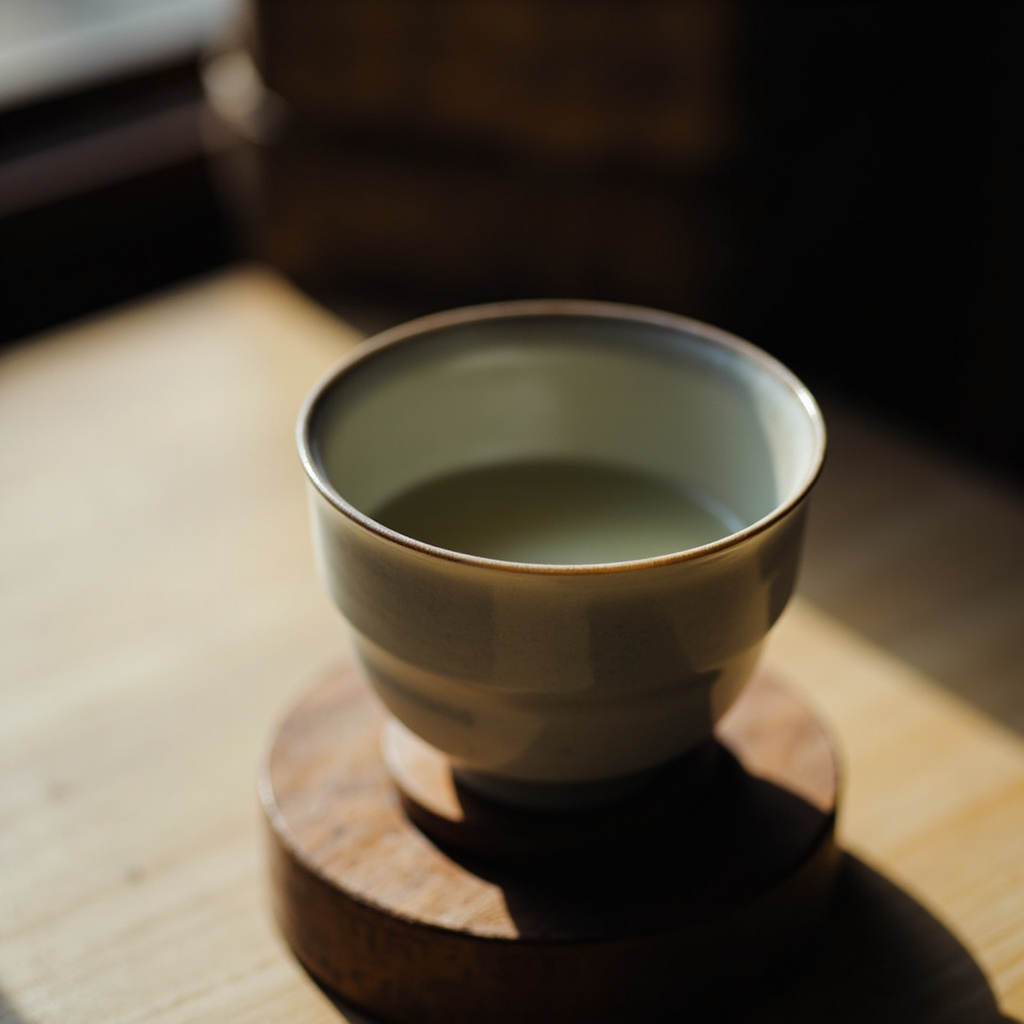
Nurturing patina is one of the great joys of owning Jianzhan.
After drinking tea, rinse with clean water. Air dry naturally or wipe with soft cloth. Never leave tea in the bowl overnight. Be consistent — beautiful patina develops over months.
Do not scrub with toothpaste or baking soda. Do not use steel wool or hard brushes. Do not soak in tea for extended periods. Do not expose to sudden temperature changes.
A: Absolutely. Modern Jianzhan production has completely solved heavy metal concerns. Purchase products with quality testing reports.
A: Price varies widely based on: glaze rarity (Yōhen > Youdi > Tuhao), craftsman fame (master pieces command premiums), firing difficulty (low production yields), and material costs (quality clay is increasingly scarce).
A: Key differences include clay color (antique near black, modern grayish), glaze surface (antique shows age/clam-shell luster), form (handmade marks evident vs. potentially too perfect), and foot rim (rough trimming vs. potentially refined).
A: Dark teas (Pu-erh, oolong, rock tea) work best for developing patina. Green and white teas are also suitable.
Jianzhan is an art form born of earth and fire, shaped by time and patience.
An antique Song Dynasty bowl carries a thousand years of craftsman's dedication, traveling through time to rest in our hands. Today's Jianzhan masters continue this heritage with their own hands, allowing ancient kiln fires to glow anew in the modern age.
Whether you are a seasoned collector or new to the world of Chinese ceramics, a Jianzhan bowl offers something rare: a tangible connection to one of China's most celebrated artistic traditions, and a daily ritual that transforms the ordinary act of drinking tea into a contemplation of beauty, history, and the mysterious alchemy of transformation.
From entry-level tuhao bowls to museum-worthy master pieces, discover the perfect Jianzhan to start or expand your collection.
Explore Our Jianzhan Collection →Entry level. Perfect for beginners exploring Jianzhan culture.
Intermediate. Exquisite oil drop patterns, exceptional craft.
Advanced. Museum-worthy works from renowned masters.
Complete set. Ideal gift for the tea connoisseur.