5,000 Years of Culture in Every Cup
China's Six Tea Families: A Complete Guide
From the misty peaks of Hangzhou to the ancient forests of Yunnan, discover the six tea families that have shaped the world's most beloved drink.
From the misty peaks of Hangzhou to the ancient forests of Yunnan, discover the six tea families that have shaped the world's most beloved drink.
Imagine a misty morning in a mountain tea garden. Your hands are warm around a porcelain cup. Steam rises in delicate spirals, carrying an aroma that has inspired poets, emperors, and philosophers for over five millennia. This is Chinese tea — not merely a beverage, but a living tradition, a bridge between the ancient and the modern, between China and the world.
China is the birthplace of tea. Legend attributes its discovery to Shennong, the Divine Farmer, who tasted 72 herbs in a single day and found that tea — then called "cha" — had the remarkable ability to refresh and restore. Whether you accept the myth or not, archaeological evidence confirms that tea was being consumed in China as early as the Han Dynasty (206 BCE – 220 CE), and by the Tang Dynasty (618–907 CE), it had become an integral part of Chinese culture, philosophy, and daily life.
In 2022, UNESCO recognized this legacy by inscribing "Traditional Tea Processing and Associated Customs" on the Representative List of the Intangible Cultural Heritage of Humanity. It spans 15 provinces and municipalities across China — a testament to how deeply tea is woven into the fabric of Chinese civilization.
Today, China produces six distinct families of tea, classified by their processing method and degree of fermentation. Each family has its own character, its own story, and its own devoted following. This guide will walk you through all six — so you can find the tea that speaks to your soul.
At the heart of Chinese tea culture is an elegant classification system based on one crucial factor: fermentation. Fermentation — technically oxidation in tea science — transforms the chemistry of the tea leaf, creating remarkably different flavors, aromas, and colors from the same plant, Camellia sinensis.
Chinese tea scholars recognize six families, ranging from unoxidized green tea to post-fermented dark tea that can age for decades. Here's how they compare at a glance:
0% fermentation. The leaves are quickly heated after picking, preserving their fresh, verdant character. Think: spinach, grass, toasted nuts.
5–10% fermentation. The most minimally processed tea — leaves are simply withered and dried. Delicate, sweet, whisper-light.
10–20% fermentation. A rare and delicate tea, similar to green but with a unique "smothering" step that creates a softer, rounder flavor.
15–70% fermentation. The most diverse family — from lightly oxidized (接近绿茶) to heavily oxidized (接近红茶). Complex, aromatic, layered.
80–90% fermentation. Fully oxidized, producing a rich, bold, malty cup. The tea that conquered the West — known as "black tea" in English.
100%+ fermentation (post-fermented). Pile-fermented or aged for years, developing deep, earthy, medicinal complexity. Think: aged wood, mushrooms, earth.
When the world thinks of Chinese tea, they most often picture green tea. It is China's most produced and most consumed tea, and its influence stretches across Asia and into the modern world. The secret to green tea's vibrant green color and fresh, clean flavor lies in its processing: the leaves are heated shortly after picking, which deactivates the enzymes responsible for oxidation. The result is a tea that tastes like spring — vegetal, grassy, sometimes sweet, sometimes nutty.
The undisputed king of Chinese green teas. Grown in the hills surrounding Hangzhou's West Lake, West Lake Longjing (often simply called "Dragon Well") is one of China's Ten Famous Teas, and arguably the most celebrated tea in the entire Chinese tea canon.
What makes Longjing extraordinary is its legendary four virtues: color (色), fragrance (香), taste (味), and shape (形). The dry leaves are flat, smooth, and sword-shaped — the result of skilled hands applying precise pressure over the course of several hours. When brewed, the liquor is a pale yellow-green, the aroma is sweet and chestnutty with an undertone of orchid, and the taste is impossibly smooth — fresh, sweet, with a long, clean finish that seems to linger in the air.
Longjing is traditionally harvested twice a year. The Pre-Qingming harvest (before the Qingming festival in early April) produces the most prized leaves — tiny, tender buds that command extraordinary prices. A single kilogram of top-grade Pre-Qingming Longjing can sell for thousands of dollars. The Guyu harvest (before the Grain Rain festival in late April) offers slightly larger leaves at more accessible prices, with flavor that is still exceptional.
From the banks of Taihu Lake in Jiangsu Province comes Pilochun (Bi Luo Chun), another of China's Ten Famous Teas. Its name means "Spiral of the Spring," a reference to its tightly rolled, snail-shell shape. The leaves are hand-rolled into tiny, emerald spirals that unfurl beautifully in hot water, releasing an intoxicating fragrance often described as flowery, fruity, and slightly sweet — notes of osmanthus flower, sweet grape, and fresh mango are commonly detected by experienced tasters.
What surprises many newcomers is the intensity of Pilochun's aroma. Because the leaves are so tightly rolled and so densely packed, even a small amount produces a spectacular fragrance. For this reason, tea lovers often use even less Pilochun than other green teas — as little as 2–3 grams per cup.
Legend has it that the tea got its name when the Qing Dynasty Emperor Kangxi visited the region and was so impressed by the tea that he personally renamed it from its local dialect name to the poetic "Pilochun." Whether or not the story is true, it reflects the deep cultural significance this humble tea holds for the people of Jiangsu.
From the misty peaks of Huangshan (Yellow Mountain) in Anhui Province, one of the most scenic mountain ranges in China, comes Huangshan Maofeng — "Fur Peak." The name refers to the tea's appearance: the leaves are covered in fine white hairs, and when they unfurl in hot water, they resemble the fur of a fox. The flavor is gentle and rounded, with notes of orchid, chestnut, and fresh vegetables. It is less famous than Longjing internationally, but among Chinese tea connoisseurs, it is revered as one of the finest expressions of the green tea family.
Of all the six tea families, white tea is the most minimalist — and perhaps the most misunderstood. In the West, "white tea" is often confused with tea that has been artificially whitened or flavored. True Chinese white tea is something entirely different: it is tea in its most natural state, with the least amount of human intervention of any tea type.
White tea production involves only two steps: withering (drying the fresh leaves in the sun or in a well-ventilated room) and drying (finishing the dehydration process). There is no rolling, no fermentation, no roasting. The result is a tea that preserves the natural character of the tea leaf with remarkable fidelity.
The most prestigious white tea is Bai Hao Yinzhen, or "White Tip Silver Needle." Made exclusively from the first spring buds of the tea plant, it consists of single, plump, silvery-white buds covered in fine white hairs. When brewed, the liquor is pale gold, almost crystal clear, with an incredibly delicate sweetness — notes of fresh hay, honeydew melon, and white flowers. The aroma is subtle, almost whisper-like, which is precisely what connoisseurs love about it.
Bai Hao Yinzhen is produced primarily in Fuding and Zhenghe counties in Fujian Province, the heartland of white tea production. The best grades are picked for only a few days each spring, when the buds are at their plumpest and most aromatic. Because so little processing is involved, the quality of the leaf is everything — and Fujian's unique terroir (soil, altitude, fog) produces tea buds of exceptional character.
One step down in prestige but not in beauty is Bai Mudan, or "White Peony." This tea is made from one bud and two leaves, which are then shaped into a distinctive peony-bud form. It offers more body and complexity than Silver Needle, with a slightly fuller mouthfeel and notes of dried apricot, toasted grain, and a gentle sweetness. It is an excellent choice for those who find Silver Needle too delicate and want something with a bit more presence.
What makes white tea particularly fascinating is its ability to age gracefully. Like fine wine, aged white tea — known as lao bai cha — develops deeper, more complex flavors over time. A 10-year-old Bai Mudan might taste of dried longan, sandalwood, and caramel, with a honeyed sweetness that young white tea simply cannot achieve. Some Chinese families have been storing white tea for decades, treating it as both a beverage and an investment.
Yellow tea is the rarest and least-known of the six tea families, accounting for less than 0.1% of China's total tea production. If you have never tried it, you are not alone — most Chinese tea drinkers have only heard of it in passing. Yet for those who have tasted a fine Junshan Yinzhen, the experience is unforgettable.
Yellow tea is processed almost identically to green tea, with one crucial extra step: men huang, or "smothering." After the leaves are fired (heated), they are piled up and covered, allowing a slight, gentle oxidation to occur. This "smothering" transforms the tea in subtle but important ways: it rounds off the grassy, slightly astringent edge typical of green tea, creating a smoother, more mellow cup with a distinctive yellowish tint to both the dry leaf and the brewed liquor.
The most famous yellow tea is Junshan Yinzhen, or "Junshan Silver Needle," which comes from Junshan Island in Dongting Lake, Hunan Province. It is one of China's Ten Famous Teas, and has been a tribute tea for emperors since the Tang Dynasty.
The tea consists of single, slender buds covered in fine golden hairs — so fine that they resemble silver threads, hence the name "Silver Needle." When brewed, the buds stand upright in the cup, suspended in the pale yellow liquor, a phenomenon known as the "needle standing" (立针), which is considered a sign of superior quality. The flavor is soft and refined, with notes of toasted chestnut, sweet corn, and a gentle floral undertone. Unlike most green teas, Junshan Yinzhen has almost no astringency — the smothering process has smoothed away every rough edge.
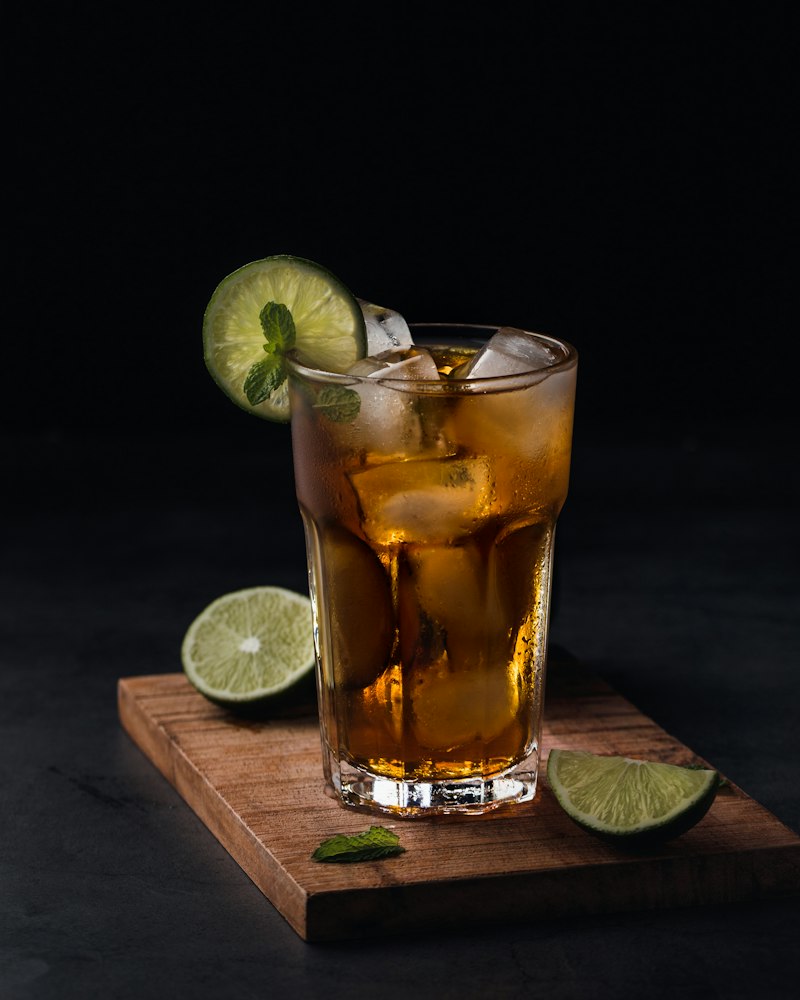
The rarity of yellow tea is partly structural — the smothering process requires great skill and experience to execute correctly, as the oxidation must be precisely controlled. Too much, and the tea loses its character; too little, and it is merely a green tea. This narrow window of correct processing means that yellow tea makers are rare, and the tea remains largely a connoisseur's beverage. If you have the chance to try Junshan Yinzhen, treat it as a rare privilege — one that connects you to centuries of imperial tradition.
If green tea is a whisper and black tea a shout, then oolong tea is a symphony — complex, layered, and endlessly variable. Oolong is the most diverse tea family in China, ranging from barely oxidized green teas that closely resemble green tea to heavily oxidized dark teas that border on black tea. In between lies an extraordinary spectrum of flavors, aromas, and textures that no other tea family can match.
The word "oolong" comes from the Chinese wulong, which means "black dragon" — a reference to the long, dark, curling leaves that characterize many oolong teas. The processing of oolong is intricate and labor-intensive: fresh leaves are withered, then repeatedly shaken (摇青) to bruise the edges (a process called "blueing" or qingxing), which initiates oxidation at the leaf edges while the center remains relatively green. The degree of shaking determines the final level of oxidation, which is why oolong teas can vary so dramatically from one another.
The name Tieguanyin (Iron Goddess of Mercy) is among the most recognized tea names in the world. From Anxi County in Fujian Province, this tea has become synonymous with high-quality oolong, and for good reason. The best Tieguanyin teas are floral, creamy, and deeply aromatic — notes of orchid, magnolia, roasted chestnut, and vanilla are commonly described by tasters.
What sets great Tieguanyin apart is its yan yun — the "rock rhyme" or resonant character that gives the tea a lingering aftertaste and a mouthfeel that seems to coat the palate. When you taste a truly excellent Tieguanyin, the flavor builds and evolves over many seconds after swallowing, revealing new layers. The legendary seven泡 (seven brews) of Tieguanyin — the claim that one set of leaves can be infused seven times with each brew revealing new dimensions — is a testament to the tea's complexity and endurance.
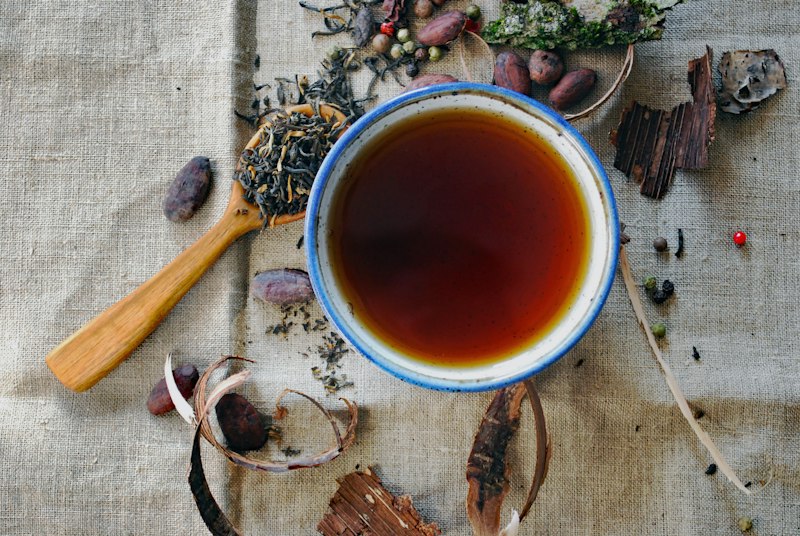
At the very pinnacle of the Chinese tea world — both in prestige and price — stands Dahongpao, or "Big Red Robe." This legendary oolong comes from the Wuyi Mountains of Fujian Province, a UNESCO World Heritage Site known for its dramatic cliffs, mists, and unique terroir that produces some of China's most distinctive teas.
The story of Dahongpao's origin is one of the most famous legends in Chinese tea culture: an ancient emperor, whose mother was suffering from an illness, was told that tea from the Wuyi Mountains could cure her. His messengers plucked the tea, but the emperor's mother was cured before the tea arrived — so in gratitude, the emperor draped his own red robe over the tea bushes. To this day, visitors to Wuyi Mountain can see what are claimed to be the original Dahongpao母树 (mother bushes), which are so old they are considered national treasures.
True, authentic Dahongpao is almost impossibly expensive — a single cup can cost hundreds of dollars, and collectors have paid tens of thousands for rare harvests. The flavor reflects this rarity: deeply complex, with notes of toasted grain, stone fruit, dark chocolate, and a distinctive mineral quality — the taste of the rocky Wuyi Mountain terroir, known as yanwei (岩味) or "rock character."
Even if you cannot afford a cup of the original Dahongpao母树, modern cultivated varieties (called qidan or "offspring of Dahongpao") offer an accessible entry point to Wuyi oolong's extraordinary flavor world, at a fraction of the price.
Black tea is the tea that conquered the West. In the 17th century, when European traders first encountered Chinese tea, it was primarily black tea that they purchased — not because the Chinese preferred it, but because black tea's fully oxidized, shelf-stable leaves survived the long sea voyage from China to Europe far better than delicate green teas. Britain, in particular, fell in love with black tea, eventually developing its own iconic tea culture — the beloved afternoon tea — around this Chinese import.
In China, black tea is called hongcha (红茶), meaning "red tea," referring to the deep red color of its liquor. The West's name for it — "black tea" — likely comes from the dark, almost black appearance of the dried leaves. Unlike green tea, black tea is fully oxidized, which transforms its chemistry dramatically: the grassy, vegetal notes disappear, replaced by rich, malty, sometimes fruity or floral flavors depending on the variety and terroir.
China's oldest black tea, Lapsang Souchong originates from the Wuyi Mountains — the same legendary tea region as Dahongpao. It is also the tea that started the global black tea trade. Its most distinctive characteristic is its extraordinary smoky aroma — the result of a traditional processing step where the leaves are smoke-dried over pinewood fires. The taste is unlike any other tea: bold, smoky, with notes of whiskey, dried longan, and a clean, brisk finish.
For many Westerners, Lapsang Souchong is an acquired taste — its smoky intensity can be startling if you are expecting something mild. But for those who come to appreciate it, there is nothing else quite like it. It pairs remarkably well with rich foods — smoked salmon, aged cheese, charcuterie — and was reportedly a favorite of Winston Churchill, who is said to have drunk it every morning.
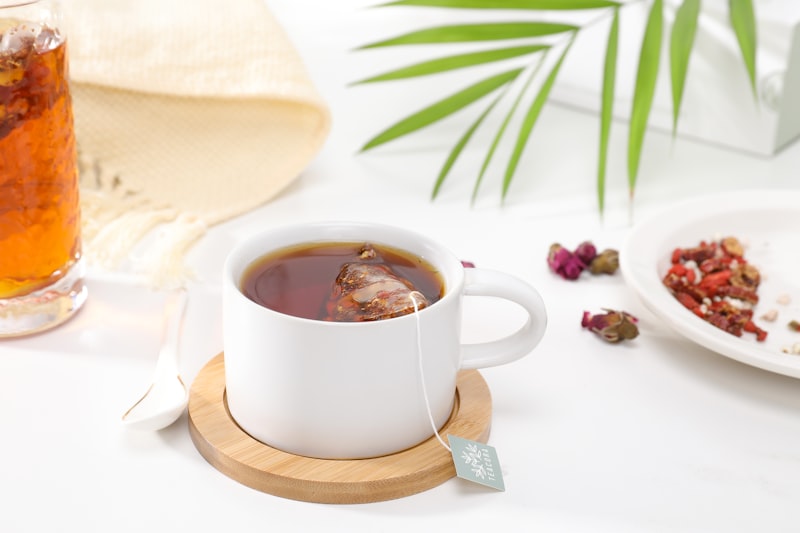
From Qimen County in Anhui Province comes Keemun (Qimen), one of the world's most celebrated black teas and one of China's Ten Famous Teas. If Lapsang Souchong is bold and smoky, Keemun is its elegant, refined cousin. The flavor profile is often described as having notes of dark plum, wine, cocoa, and a distinctive floral quality — some tasters detect a rose-like fragrance that is remarkably complex for a black tea. Keemun is the primary tea used in many classic English Breakfast blends, valued for its ability to produce a full-bodied, richly flavored cup without the harshness of some other black teas.
Keemun's refinement is partly a product of its terroir (the sandy, acidic soil of the Qimen region) and partly a product of its meticulous processing. The finest grades of Keemun undergo a particularly careful withering and oxidation process that preserves the tea's natural fragrance compounds while developing its characteristic depth.
A newer arrival to the black tea world, Jin Jun Mei (Golden Eyebrow) was developed in the early 2000s in the Wuyi Mountains and has since become one of the most prized and expensive black teas in China. Made from the first spring buds of indigenous tea plants — and requiring approximately 70,000 hand-plucked buds to produce just one kilogram — Jin Jun Mei is essentially a luxury product. The flavor is remarkably refined: honeyed, fruity (notes of dried plum and apricot), with a sweetness that seems to coat the mouth. There is virtually no astringency, and the aftertaste is long and satisfying.
The final and most unusual tea family is dark tea (hei cha), often called "post-fermented tea." Unlike other teas, where oxidation is a one-time process that occurs during processing, dark tea undergoes a secondary fermentation — either through a controlled "pile fermentation" process (渥堆) or through years of natural aging. This gives dark tea a flavor profile unlike any other: deep, earthy, sometimes musty, sometimes surprisingly sweet, and always deeply complex. For many enthusiasts, the older the dark tea, the better — some aged Pu-erh cakes command prices comparable to fine wine.
Dark tea is produced primarily in Yunnan Province (Pu-erh), Hunan Province (Anhua Dark Tea), and Sichuan Province. Each region has its own processing traditions and flavor profiles, but all share the common characteristic of becoming more complex and smoother with age.
Pu-erh is dark tea's most famous and polarizing variety. From Yunnan Province in southwestern China, it is made from the large-leaf tea plant (Camellia sinensis var. assamica) that thrives in Yunnan's high-altitude, fog-shrouded mountain forests — among the most ancient tea-growing regions on earth. Some of the tea trees in Yunnan are over 1,000 years old, and there is a living tree at Fengching that is estimated to be 3,200 years old.
What sets Pu-erh apart from all other teas is its aging potential. Unlike other teas that deteriorate over time, properly stored Pu-erh improves — its harsh edges soften, its flavors deepen and become more complex, and its texture becomes smoother and more textured. Young Pu-erh (sheng pu-erh) can be astringent, bitter, and grassy — but aged sheng pu-erh (20+ years) develops extraordinary flavors of dried fruit, wood, honey, and a pleasant earthiness that is deeply satisfying.
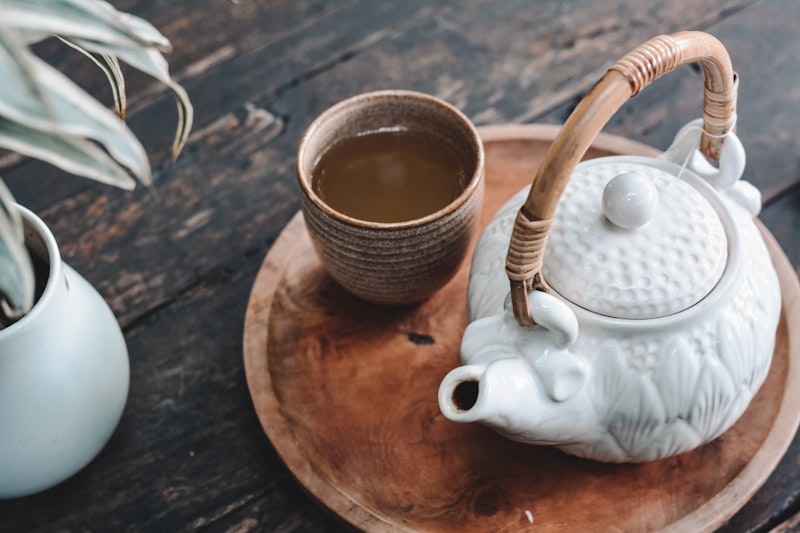
Pu-erh is also available in shu (熟普, "cooked") form, which undergoes accelerated aging through the pile fermentation process — months of controlled microbial fermentation that mimics what would happen naturally over 20–30 years. Shu Pu-erh is ready to drink almost immediately, with flavors of earth, wood, dark chocolate, and a smooth, almost oily mouthfeel. For those who want to experience the complexity of aged Pu-erh without the wait, shu is an excellent entry point.
The Pu-erh market has become a significant investment arena in China, with collectors storing and trading aged Pu-erh cakes much as one might trade fine wine. Some rare 1970s and 1980s Pu-erh cakes have sold for hundreds of thousands of dollars — making Pu-erh not just a beverage, but a cultural artifact and an investment vehicle.
One of the most beautiful aspects of Chinese tea culture is its emphasis on the process. Brewing tea is not merely a means to an end — it is itself a form of meditation, a moment of pause in a busy day. Here is a guide to brewing each of the six tea families:
Water at 80–85°C (175–185°F) is critical — boiling water will cook the delicate leaves, turning them bitter. Use 3–5g of tea per 150ml. The first infusion should steep for 1–2 minutes. For the second and third infusions, add 15–20 seconds each. Green tea is best enjoyed in a transparent glass so you can watch the leaves unfurl — a visual pleasure that complements the taste.
Because white tea is so minimally processed, it is remarkably forgiving in the brewing process. Use water at 85–90°C (185–195°F). White tea can take slightly higher temperatures than green tea without becoming bitter. Use 4–6g per 150ml and steep for 3–5 minutes. One of the joys of white tea is that the same leaves can be re-infused many times — each brew reveals new aspects of the tea's character.
Because yellow tea is processed similarly to green tea, the brewing approach is similar: water at 85–90°C, steep for 2–3 minutes. The key difference from green tea is that yellow tea's smothering process gives it a softer, less astringent character, so it is more forgiving of slightly longer steeps. Use 3–5g per 150ml.
Oolong deserves the most elaborate brewing method of all — the traditional gongfu cha (工夫茶) style, using a small clay teapot (朱泥壶) or gaiwan and multiple short infusions. Use water at 90–95°C for lighter oolongs and 95–100°C for heavily oxidized ones. Use 5–8g of tea per 100 ml of water. The first infusion (醒茶, "awakening tea") is poured out after 15–20 seconds to wash the leaves. Subsequent infusions start at 20–30 seconds and increase gradually. A fine oolong should yield at least 8–10 infusions.
Black tea forgives higher temperatures better than delicate green teas. Use water at 95–100°C (boiling or nearly boiling). Use 3–5g per 200ml and steep for 3–5 minutes. Black tea can handle milk, lemon, and sweetener better than any other Chinese tea — though we encourage you to try it straight first to appreciate its full complexity. British-style black tea often includes milk, added after brewing.
Pu-erh and dark teas can handle — and actually benefit from — the highest temperatures. Use 100°C (boiling) water. The traditional method is to use a Yixing clay teapot or a small gaiwan, with 5–8g of tea per 100 ml. For Pu-erh, consider the "gongfu" method with multiple short infusions. Alternatively, many Chinese brew Pu-erh by boiling whole pieces in a kettle — a method that produces an intensely flavored, deeply satisfying tea that is perfect for sharing among friends.

In Traditional Chinese Medicine (TCM), every person has a constitutional type — and different teas suit different constitutions. This is not just folk wisdom; modern nutrition science has begun to identify the physiological mechanisms underlying these traditional recommendations. Here is a practical guide to matching your body type with your tea:
You tend to feel cold, especially in your hands and feet. You prefer warm drinks and may experience fatigue. Recommendation: Black tea, dark tea — these fully fermented teas are naturally warming and help stimulate circulation. Try Keemun or Lapsang Souchong.
You tend to feel hot — especially in your hands, feet, and face. You may experience dry mouth, restless sleep, or anxiety. Recommendation: Green tea, white tea — their cooling, refreshing character helps clear internal heat. Try Longjing or Bai Hao Yinzhen.
You tire easily, may have a weak voice, and feel short of breath after light activity. Recommendation: Aged dark tea (熟普), aged white tea — these gently warming, easily digestible teas are kind to the spleen and help build energy gradually.
You may feel heavy, bloated, or notice phlegm, especially after dairy or rich foods. Recommendation: Oolong tea, dark tea — both are traditionally associated with aiding digestion and "cutting through" dampness in the body.
For over two thousand years, Chinese tea culture has been inseparable from philosophy. Tea is not merely a drink in China — it is a practice, a way of cultivating self-awareness, social harmony, and connection to nature. At its deepest level, Chinese tea culture embodies four principles that have guided tea practitioners for generations:
The goal of tea is not to dominate or impress — it is to create a space of harmony between host and guest, between the human and the natural world. Tea ceremony creates a temporary space where social hierarchies dissolve and genuine connection becomes possible.
Tea practitioners show respect to the tea itself, to the person who grew it, to the water that brewed it, and to the guests who share it. The formal etiquette of Chinese tea — the precise movements, the careful sequencing — is an expression of this deep reverence.
Tea requires — and cultivates — purity of body, mind, and environment. The tea space is kept immaculate; the water is the purest available; the mind is cleared of distraction. In this purity, a kind of clarity becomes possible that daily life rarely offers.
The final and most elusive principle is ji — stillness, silence, solitude. In the quiet of the tea space, stripped of the noise and hurry of ordinary life, one encounters oneself. This is the ultimate purpose of tea, as the Chinese tea masters have understood it for centuries.
In the modern world, these four principles feel more relevant than ever. We live in an age of relentless stimulation and distraction. We check our phones hundreds of times a day. We eat while working, sleep while scrolling, and rarely give any single moment our full attention. Chinese tea culture offers something radically different: a structured, beautiful, deeply satisfying practice of presence.
You do not need a Japanese tearoom or a $500 teapot to practice this. All you need is a cup, some hot water, and five minutes of genuine attention. Brew your tea. Watch the leaves unfold. Smell the aroma. Taste slowly. This is not escapism — it is the opposite: it is coming fully home to the present moment, which is the only moment that actually exists.

While the Chinese have known about tea's health benefits for millennia, modern science is now confirming and explaining these traditional claims. Here is what research has established about each tea family's effects on the body:
Multiple studies show that regular green and black tea consumption is associated with lower LDL cholesterol, improved blood vessel function, and reduced risk of heart disease. The catechins in green tea (especially EGCG) are particularly potent.
L-theanine — an amino acid found uniquely in tea — has been shown to improve focus and attention while simultaneously promoting relaxation. Green tea contains the highest levels of L-theanine, which may explain why it energizes without causing the jitters associated with coffee.
Studies consistently show that oolong tea increases metabolic rate and fat oxidation. The polyphenols in oolong are particularly effective at activating enzymes that break down triglycerides — the fat stored in fat cells.
Pu-erh's post-fermentation process creates unique microbial compounds (including Lovastatin) that have been linked to improved gut microbiota composition, better digestion, and reduced LDL cholesterol levels.
Whether you are drawn to the fresh, grassy notes of a Pre-Qingming Longjing, the haunting smokiness of Lapsang Souchong, or the age-worthy complexity of a 20-year-old Pu-erh cake — there is a Chinese tea that is waiting to speak to you. The hardest step is the first one: ordering your first set of leaves, preparing your first cup, and giving yourself five quiet minutes to taste it properly.
Explore Our Tea Collection →There is a Chinese saying: "酒多人颠,茶多人和" — "Wine makes many people go mad; tea brings many people into harmony." This simple line captures the essence of Chinese tea culture's unique appeal. Tea does not demand intoxication or oblivion. It asks only for presence — a few minutes of your full attention, in exchange for a moment of harmony with yourself and the world.
In an age of distraction, that may be the greatest gift tea has to offer.
We hope this guide has inspired you to explore the extraordinary world of Chinese tea. The six families described here are just the beginning — within each category lie hundreds of distinct teas, each with its own terroir, its own story, its own character. The journey of discovery never truly ends.
Happy brewing. Gongfu cha.